Table of contents
1. Understanding the Growing Interest in Longevity Medicine and Metabolic Health
2. What Are Peptides and Emerging Therapeutic Molecules?
3. Six Emerging Molecules Shaping Longevity and Metabolic Health
4. Why Healthcare Businesses Are Exploring Longevity Programs
5. How Telemedicine Is Transforming Longevity and Metabolic Health
6. Essential Technology for Building and Scaling Digital Longevity Programs
7. How DrCare247 Supports Integrated Digital Healthcare Programs
8. The Future of Longevity Medicine and Preventive Healthcare
9. Frequently Asked Questions
The healthcare industry is experiencing growing interest in longevity medicine, metabolic health, personalized healthcare, and emerging therapeutic research. Advances in peptide science, hormone-related treatments, cellular biology, and obesity research are creating new opportunities for healthcare providers, medical practices, and digital health organizations.
Molecules such as Retatrutide, MOTS-c, NAD+, CagriSema, Sermorelin, and Tesamorelin are attracting attention across clinical research and the longevity and wellness markets. Each represents a different area of scientific interest, from metabolic regulation and cellular energy to hormone pathways and weight management.
As these areas evolve, healthcare organizations are exploring how to develop specialized clinical programs that combine physician-led care, diagnostic services, digital patient engagement, and ongoing health monitoring.
However, delivering these services requires more than virtual consultations. Healthcare businesses need connected technology that supports patient onboarding, clinical assessments, electronic health records (EHR), laboratory integrations, electronic prescribing, and care coordination.
This is where longevity medicine telehealth becomes increasingly relevant. Integrated healthcare infrastructure, such as DrCare247, helps healthcare organizations connect essential digital healthcare capabilities and establish a foundation for developing and scaling specialized clinical programs.
Understanding the Growing Interest in Longevity Medicine and Metabolic Health
Longevity medicine is an evolving area of healthcare focused on healthy ageing, preventive healthcare, metabolic function, and long-term health outcomes.
Unlike conventional healthcare approaches that often focus on managing existing conditions, longevity-focused healthcare also explores ways to understand individual health risks, monitor biological changes, and support long-term health management.
Metabolic health is an important part of this approach. It involves several interconnected processes, including glucose regulation, energy metabolism, body composition, and hormonal function.
Some of the major areas receiving attention include:
- Metabolic health: Understanding glucose regulation, obesity, and metabolic conditions.
- Cellular health: Exploring mitochondrial function, cellular energy, and biological signalling.
- Hormone health: Evaluating endocrine function and hormone-related conditions.
- Preventive healthcare: Supporting early assessments, diagnostic testing, and ongoing health monitoring.
- Peptide research: Investigating the biological functions and potential clinical applications of different peptides.
These developments are encouraging healthcare providers and digital health startups to evaluate new service models.
For example, a longevity clinic may combine physician consultations, diagnostic testing, preventive health assessments, and ongoing patient engagement through a connected digital healthcare platform.
For businesses exploring this opportunity, DrCare247 offers an integrated technology approach that connects patient management, teleconsultation, EHR, and other healthcare workflows.
Peptides and Emerging Therapeutic Molecules
Peptides are short chains of amino acids that participate in different biological processes. Depending on their structure and function, they can influence cellular signalling, hormone pathways, metabolic processes, and other physiological activities.
Researchers are investigating different peptides and related molecules for their potential applications in metabolic health, endocrinology, obesity research, and longevity science.
Growing interest in these areas is encouraging healthcare organizations to evaluate emerging clinical opportunities.
However, not every molecule receiving attention in the wellness market has established clinical benefits or FDA approval. It is important to distinguish between investigational compounds, approved prescription medicines, and treatments supported by established clinical evidence.
Understanding these differences helps healthcare providers evaluate emerging therapies responsibly and develop appropriate clinical programs.
Six Emerging Molecules Shaping Longevity and Metabolic Health Research
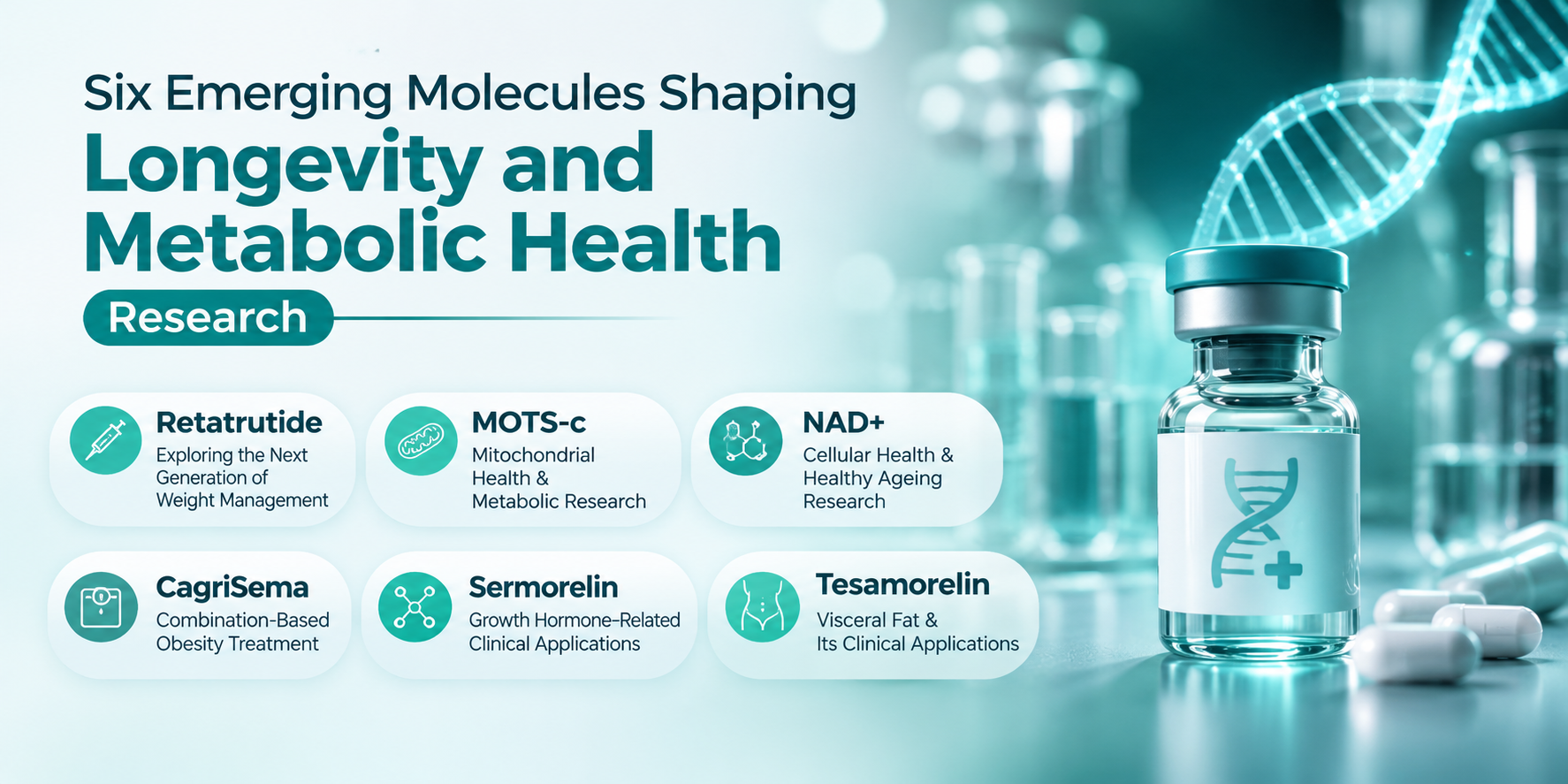
Several molecules are receiving attention across metabolic health, longevity research, and specialized clinical care. Each has a different research background, mechanism, and regulatory status.
1. Retatrutide Research: Exploring the Next Generation of Weight Management
Retatrutide is an investigational medication being studied for obesity and metabolic health. It acts on three hormone receptors: GLP-1, GIP, and glucagon.
Its multi-receptor activity has generated interest in next-generation approaches to weight management and metabolic disease research.
Researchers are investigating its potential effects on body weight, glucose regulation, and metabolic processes.
Key research areas:
- GLP-1, GIP, and glucagon receptor activity.
- Obesity and metabolic disease.
- Body-weight reduction in clinical trials.
- Glucose regulation.
- Next-generation weight-management approaches.
Healthcare Opportunities in Emerging Weight Management Research
Developments in obesity research are increasing the need for structured medical weight-management services.
Healthcare providers and digital health startups can evaluate the infrastructure needed to support physician-led programs, including patient intake, clinical eligibility assessments, virtual consultations, laboratory coordination, and ongoing monitoring.
With DrCare247, healthcare organizations can explore connected digital workflows for patient onboarding, physician consultations, clinical documentation, and laboratory coordination.
Clinical status: Retatrutide remains investigational and is not FDA-approved. It should not be presented as an available routine telehealth prescription.
2. MOTS-c and Metabolic Health: Exploring Mitochondrial Research
MOTS-c is a mitochondria-derived peptide that has attracted research interest because of its potential relationship with metabolic regulation and cellular signalling.
Mitochondria play an important role in cellular energy production. Research into mitochondria-derived peptides is exploring how these molecules may participate in metabolic processes and cellular stress responses.
MOTS-c has been investigated primarily in experimental research, with interest in its potential relationship to metabolic health and biological ageing.
Key research areas:
- Mitochondrial signalling.
- Cellular energy regulation.
- Glucose metabolism research.
- Metabolic stress responses.
- Healthy ageing research.
Implications for Longevity and Preventive Healthcare Services
Growing interest in mitochondrial biology creates opportunities for healthcare organizations to develop educational resources and evidence-based preventive health services.
Longevity clinics and digital healthcare providers can explore how integrated platforms support patient assessments, physician consultations, diagnostic coordination, and longitudinal health records.
DrCare247 can support the digital workflows required for connected longevity programs through telehealth, EHR, and laboratory integration capabilities.
Clinical status: MOTS-c remains experimental. FDA has identified important safety-information gaps and concerns associated with compounded MOTS-c products. Its therapeutic effectiveness in humans has not been established.
3. NAD+ Therapy and Cellular Health: Understanding Healthy Ageing Research
Nicotinamide adenine dinucleotide (NAD+) is a coenzyme involved in cellular energy metabolism and several important biological processes.
It participates in mitochondrial function, cellular signalling, and biochemical pathways associated with DNA repair.
NAD+ has become a prominent subject in the longevity and wellness market because of its relationship with cellular metabolism and healthy ageing research.
Key areas of interest:
- Cellular energy metabolism.
- Mitochondrial function.
- Cellular signalling.
- DNA repair pathways.
- Healthy ageing research.
Integrating Cellular Health into Digital Healthcare Programs
Interest in cellular health is encouraging healthcare providers to evaluate broader longevity and preventive health programs.
These programs may involve physician consultations, health assessments, diagnostic testing, and personalized follow-up based on clinical needs.
For healthcare startups, the challenge is connecting these services through a coordinated patient experience.
DrCare247 provides integrated healthcare technology capabilities, including digital patient onboarding, teleconsultation, EHR workflows, and laboratory integrations to help organizations coordinate these services.
Clinical distinction: NAD+ is a coenzyme, not a peptide. Its established biological role should not be confused with proof that NAD+ supplements or injectable therapies deliver anti-ageing benefits. FDA has also raised safety concerns about certain compounded injectable NAD+ products.
4. CagriSema Weight Management: Understanding Combination-Based Obesity Treatment
CagriSema is an investigational combination of cagrilintide, a long-acting amylin analogue, and semaglutide, a GLP-1 receptor agonist.
The combination is being studied as a potential approach to weight management and obesity treatment.
It has attracted attention because it involves two different hormonal pathways associated with appetite regulation and metabolic processes.
Key research areas:
- Amylin-related pathways.
- GLP-1 receptor activity.
- Appetite regulation.
- Body-weight management.
- Combination-based obesity treatment.
Building Connected Care Models for Advanced Weight Management
Developments in obesity research are creating opportunities for medical practices and digital health companies to evaluate comprehensive weight-management services.
A structured digital weight-management program may require:
- Patient intake and medical history collection.
- Physician-led eligibility assessments.
- Diagnostic and laboratory coordination.
- Clinical documentation.
- Follow-up consultations.
- Patient communication and engagement.
DrCare247 provides connected telehealth infrastructure that can support these operational workflows for healthcare organizations developing metabolic health services.
Clinical status: As of November 16, 2026, CagriSema remains investigational and is not approved for use in the United States. Its FDA application is under review.
Sermorelin is a synthetic peptide related to growth hormone-releasing hormone (GHRH).
It has been discussed in the context of growth hormone pathways and endocrine-related healthcare. Its mechanism involves stimulating the pituitary gland to release growth hormone.
Interest in sermorelin is frequently associated with hormone health, although its use in wellness and anti-ageing marketing should be distinguished from established clinical indications and evidence.
Key areas of clinical interest:
- Growth hormone-releasing pathways.
- Endocrine health.
- Hormone-related assessments.
- Growth hormone signalling.
- Clinical monitoring.
Supporting Structured Care for Hormone-Related Health Programs
Healthcare organizations exploring hormone-related clinical programs need structured workflows for patient screening, medical history collection, provider assessments, laboratory coordination, and follow-up care.
A digital platform can help connect these activities while maintaining appropriate physician oversight.
DrCare247 supports healthcare businesses with integrated teleconsultation, clinical documentation, laboratory connectivity, and patient management capabilities.
6. Tesamorelin Therapy: Understanding Visceral Fat and Its Clinical Applications
Tesamorelin is a synthetic growth hormone-releasing factor analogue with an FDA-approved prescription indication.
It is indicated for reducing excess abdominal fat in adults with HIV-associated lipodystrophy.
Its clinical background has made it relevant to discussions around endocrine health, body composition, and specialized metabolic care.
Key areas of clinical relevance:
- Growth hormone-releasing pathways.
- Visceral abdominal fat.
- HIV-associated lipodystrophy.
- Endocrine health.
- Medical monitoring.
7. Coordinating Specialized Metabolic and Endocrine Care
Specialized clinical programs require coordinated medical assessments and ongoing patient management.
Healthcare providers need the ability to document consultations, coordinate relevant laboratory testing, manage eligible prescriptions, and maintain follow-up records.
DrCare247’s connected clinical infrastructure can help organizations coordinate these workflows through EHR, electronic prescribing, teleconsultation, and laboratory capabilities.
Clinical distinction: Tesamorelin’s FDA-approved indication is specific to HIV-associated lipodystrophy. It is not approved as a general weight-loss or anti-ageing treatment.
Why Healthcare Businesses are Exploring Longevity and Metabolic Health Programs
The growing interest in longevity medicine and metabolic health is encouraging healthcare organizations to evaluate new service models.
Clinics, physician groups, healthcare startups, and digital health companies are looking beyond individual consultations toward connected, ongoing care programs.
Several factors are influencing this development.
1. Growing Interest in Personalized Healthcare
Patients and healthcare providers are increasingly interested in healthcare approaches that consider individual medical histories, diagnostic information, health goals, and clinical requirements.
Personalized healthcare programs can combine physician assessments, relevant laboratory testing, and follow-up consultations.
2. Expansion of Specialized Clinical Programs
Healthcare organizations are evaluating specialized service areas such as:
- Weight and metabolic health.
- Hormone health.
- Preventive healthcare.
- Longevity medicine.
- Sexual health.
- Specialized wellness services.
These programs require appropriate clinical protocols, qualified providers, diagnostic capabilities, and reliable patient management systems.
3. Demand for Connected Digital Healthcare Experiences
Managing patient information across disconnected applications can create operational challenges.
Healthcare businesses increasingly need platforms that connect scheduling, patient intake, consultations, medical records, prescriptions, diagnostics, and follow-up workflows.
This creates an opportunity for integrated telehealth infrastructure providers such as DrCare247.
How Telemedicine Is Transforming Longevity and Metabolic Health
Telemedicine is expanding how healthcare organizations deliver consultations, manage patient information, and coordinate clinical services.
For longevity clinics and digital health businesses, virtual care can provide a connected patient experience while supporting the operational requirements of specialized clinical programs.
1. Digital Patient Onboarding and Clinical Intake
Digital onboarding allows patients to submit their personal information, medical history, health concerns, and relevant documentation before consultations.
Healthcare providers can review the information and determine the appropriate clinical assessment process.
DrCare247 supports digital patient onboarding and branded patient experiences, helping healthcare organizations manage the initial stages of the patient journey.
Learn more about white-label telehealth solutions for healthcare businesses.
2. Virtual Consultations and Physician Network Capabilities
Virtual consultations allow patients to connect with qualified healthcare professionals remotely.
Providers can review medical histories, conduct appropriate assessments, discuss clinical options, and determine whether further testing or in-person evaluation is required.
DrCare247 connects teleconsultation workflows with patient records and clinical documentation, supporting a more coordinated consultation experience.
3. EHR and Clinical Documentation Management
Electronic health records help healthcare organizations maintain structured patient information, clinical notes, medical histories, and treatment documentation.
For specialized clinical programs, connected records can help providers access relevant information during consultations and follow-up appointments.
DrCare247’s EHR capabilities connect clinical documentation and other patient management workflows within a digital healthcare environment.
Healthcare organizations can also explore clinical notes solutions for structured clinical documentation.
4. Laboratory and Diagnostic Integration
Laboratory testing can play an important role in metabolic health, hormone-related assessments, and preventive healthcare.
Integrated laboratory workflows can help providers coordinate test requests, access diagnostic results, and maintain relevant patient information.
Through healthcare integrations, DrCare247 helps organizations connect relevant healthcare systems and coordinate clinical workflows.
5. Electronic Prescriptions and Pharmacy Coordination
When a licensed provider determines that medication is clinically appropriate, electronic prescribing can help connect the prescribing process with eligible pharmacy services.
Integrated e-prescription workflows can reduce manual administrative steps and improve prescription coordination.
DrCare247 supports electronic prescribing through its electronic prescription capabilities.
6. Patient Engagement and Ongoing Follow-Up
Longevity and metabolic health programs may involve multiple consultations, diagnostic assessments, and ongoing clinical reviews.
Patient engagement capabilities can support appointment reminders, secure communication, follow-up coordination, and access to relevant health information.
A connected platform helps healthcare organizations manage patient interactions throughout the care journey.
Essential Technology for Building and Scaling Digital Longevity Programs
Launching a longevity or metabolic health program requires more than a website and virtual consultation software.
Healthcare businesses need an integrated technology environment that supports both clinical operations and business management.
1. White-Label Telehealth Platform
A white-label telehealth platform allows healthcare organizations to deliver digital healthcare services under their own brand.
It can support branded patient onboarding, scheduling, virtual consultations, patient portals, and communication workflows.
Healthcare startups can evaluate white-label solutions to establish their digital presence while using connected healthcare technology.
2. Physician Network and Clinical Oversight
Healthcare businesses need access to appropriately licensed and qualified healthcare professionals who can assess patients, make clinical decisions, and oversee ongoing care.
Organizations can evaluate whether to use their own providers or work with an external physician network, depending on their operating model and clinical requirements.
3. EHR and Clinical Workflow Integration
Connected EHR systems help providers manage clinical documentation, medical histories, assessments, and follow-up workflows.
Integration with other healthcare systems can reduce fragmented information and manual administrative processes.
4. Laboratory and Pharmacy Connectivity
Laboratory and pharmacy integrations help connect diagnostic coordination and eligible prescription workflows with the broader patient record.
These capabilities are important for healthcare programs that require ongoing medical assessments and medication management.
5. HIPAA-Aligned Security and Data Management
Healthcare organizations handling protected health information must implement appropriate privacy and security safeguards.
This includes access controls, secure communication, data protection, and applicable HIPAA compliance requirements.
How DrCare247 Supports Integrated Telehealth Infrastructure for Healthcare Businesses
As healthcare organizations explore new clinical opportunities, selecting the right technology infrastructure becomes an important business decision.
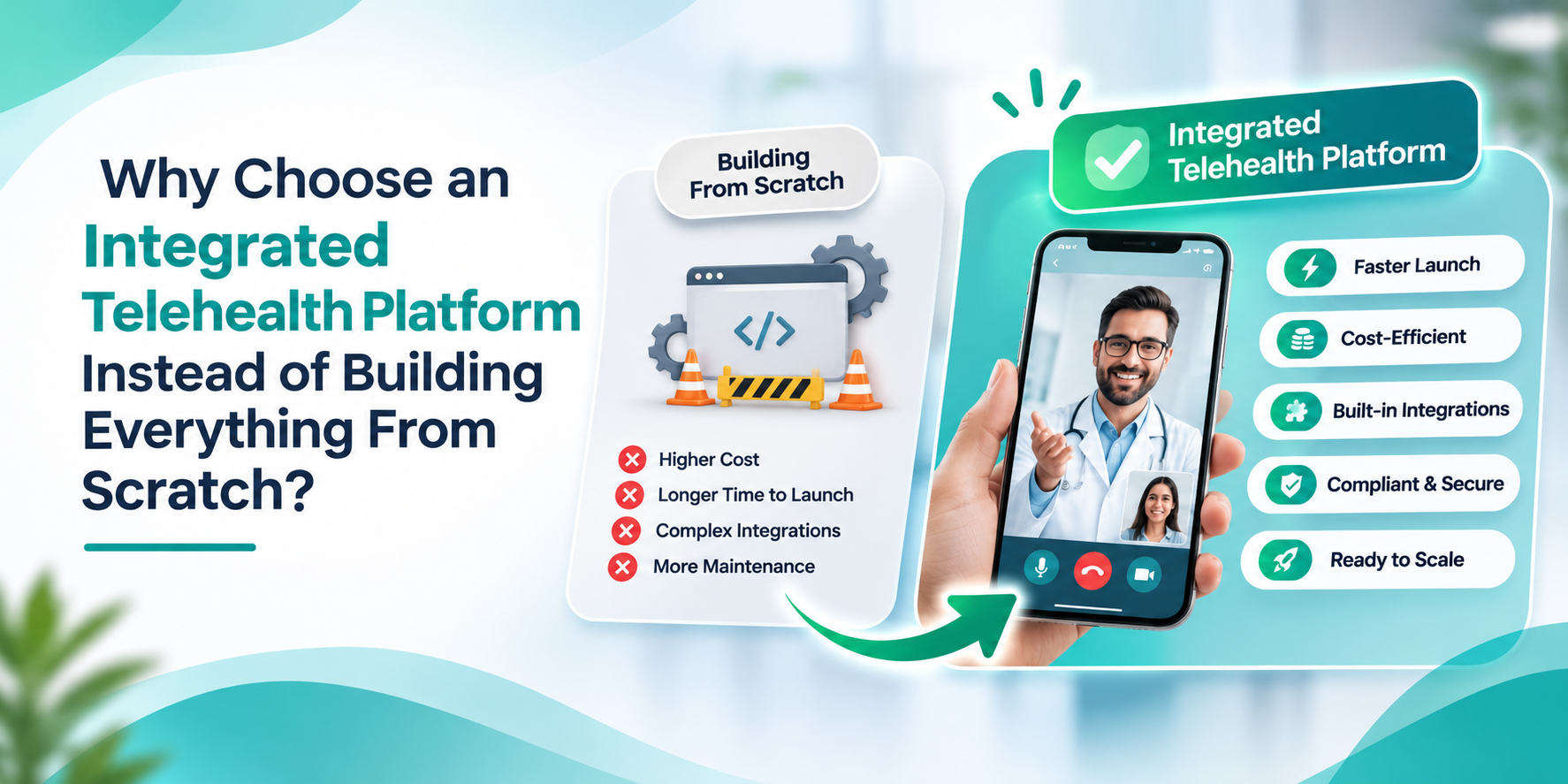
Building a complete digital healthcare operation independently may require multiple vendors for telehealth software, provider networks, electronic health records, pharmacy connectivity, laboratory services, and patient engagement.
DrCare247 provides integrated healthcare infrastructure designed for healthcare providers, medical practices, and digital health businesses.
1. Connected Telehealth Technology
DrCare247 connects essential healthcare workflows, including patient onboarding, appointment scheduling, virtual consultations, clinical documentation, and patient engagement.
2. Physician Network Capabilities
Healthcare organizations can evaluate provider network capabilities or bring their own clinicians, depending on their operating model and clinical requirements.
3. Connected EHR and E-Prescription Workflows
Integrated clinical records and electronic prescribing help coordinate documentation and eligible medication workflows within the patient care journey.
4. Laboratory and Diagnostic Integrations
Connected laboratory capabilities support test ordering and result coordination as part of broader clinical workflows.
5. White-Label Healthcare Infrastructure
Healthcare startups and established organizations can launch digital healthcare services under their own brand using DrCare247’s white-label infrastructure.
Rather than assembling separate systems for every operational requirement, businesses can use an integrated platform to support their healthcare delivery model.
Build and Scale Your Digital Healthcare Business with DrCare247
Whether you are developing a longevity clinic, expanding a metabolic health program, or launching a specialized telehealth business, the right infrastructure can help connect your clinical and operational workflows.
DrCare247 brings together telehealth technology, physician network capabilities, EHR workflows, electronic prescribing, laboratory integrations, and patient engagement to support connected digital healthcare services.
The Future of Longevity Medicine and Preventive Healthcare
Longevity medicine and metabolic health are evolving through continued research, new therapeutic developments, and increasing interest in personalized healthcare.
Emerging molecules such as Retatrutide, MOTS-c, NAD+, CagriSema, Sermorelin, and Tesamorelin represent different areas of scientific and clinical interest. Their evidence levels, approved indications, and regulatory pathways are not interchangeable.
For healthcare businesses, the opportunity extends beyond individual therapies. Developing a sustainable digital healthcare program requires qualified clinical oversight, patient management, diagnostic coordination, and connected technology.
Telemedicine infrastructure can help healthcare organizations bring these capabilities together and prepare for changing healthcare delivery models.
DrCare247 supports this approach by connecting software, clinical workflows, and operational capabilities through an integrated healthcare platform.
As longevity and preventive healthcare continue to develop, organizations with scalable technology and responsible clinical workflows will be better positioned to evaluate emerging opportunities.
FAQs